The six materials buyers ask about#
We make cotton canvas bags every day, but our customers also compare quotes for jute, non-woven and recycled plastic bags. Here is a straight comparison, including where canvas is not the best choice.
| Material | Look & feel | Strength | Print quality | Relative price | Typical life |
|---|---|---|---|---|---|
| Cotton canvas (8–16 oz) | Natural, premium, soft to structured | High | Excellent (screen, DTF, embroidery) | $$–$$$ | Years |
| Light cotton (4–6 oz) | Thin, soft | Medium | Good | $–$$ | Months to years |
| Jute / burlap | Rustic, coarse texture | High | Limited — bold, simple designs | $$ | Years |
| Non-woven PP | Papery, promotional | Medium | Good for simple logos | $ | Dozens of uses |
| rPET (recycled PET) | Smooth, sporty | High | Excellent full colour | $–$$ | Years |
| Poly-cotton canvas | Canvas look, smoother face | High | Excellent, incl. sublimation | $$ | Years |
What life-cycle studies really say#
The most cited study is the 2018 life-cycle assessment of grocery carrier bags by the Danish Environmental Protection Agency. It compared how many times each bag type must be reused to match the overall environmental impact of a basic plastic carrier bag, across many indicators such as water use, land use and ozone depletion.
- non-woven PP bag
- ≈52×
- recycled PET bag
- ≈84×
- composite / jute bag
- ≈870×
- conventional cotton bag
- ≈7,100×
Other analyses reach similar conclusions. MIT's sustainability office notes that the footprint of any reusable bag depends on how often it is used, and New Zealand's environment ministry recommends choosing a durable bag you will reuse and looking for recycled content.
“The greenest tote is the one that is still being carried five years after your event. Good fabric, strong handles and a design people like matter more than the material label.”
Cotton canvas: the brand builder#
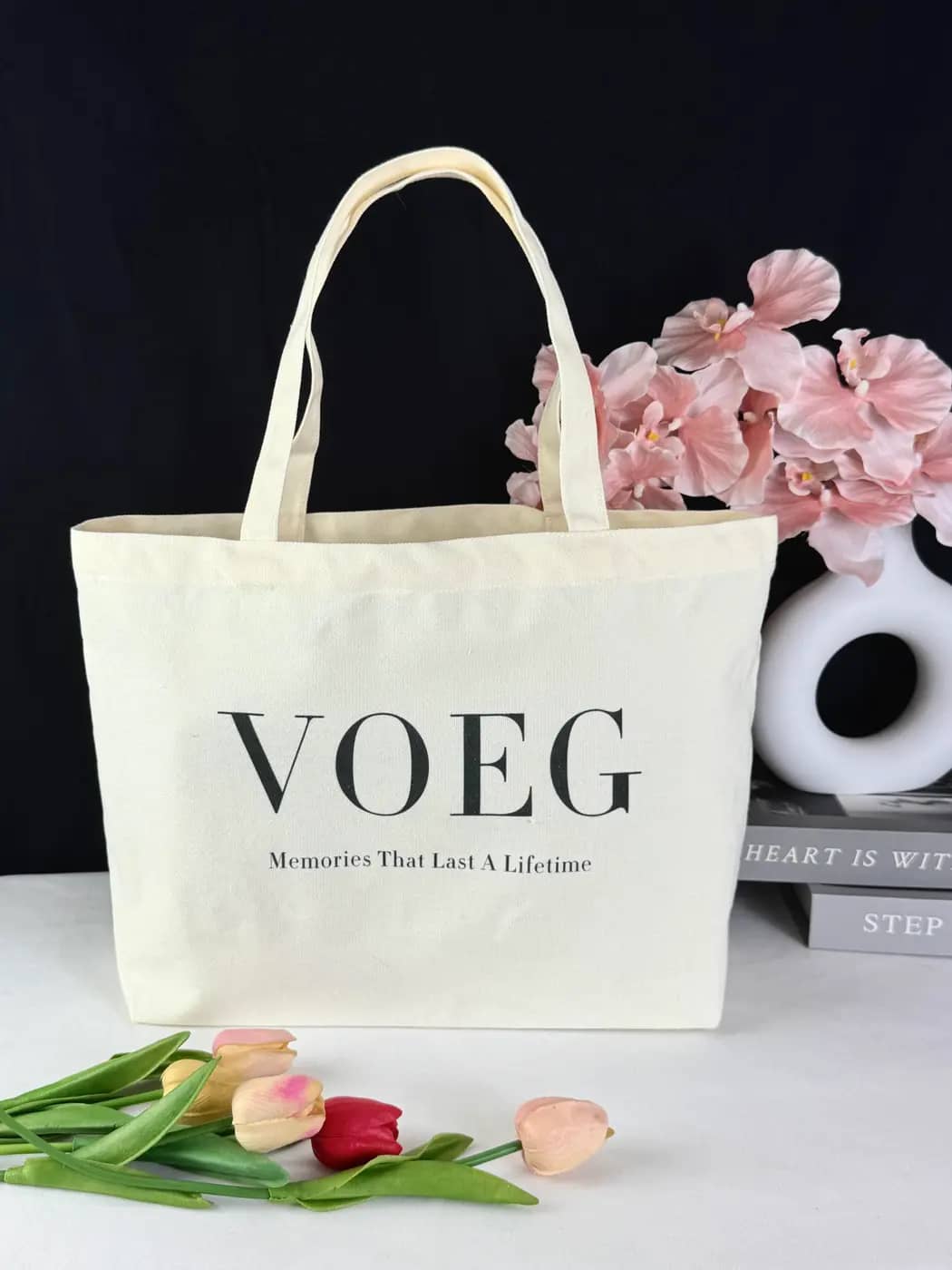 Cotton canvas
- Natural, premium look
- Prints, embroiders and ages beautifully
- Customers keep it for years
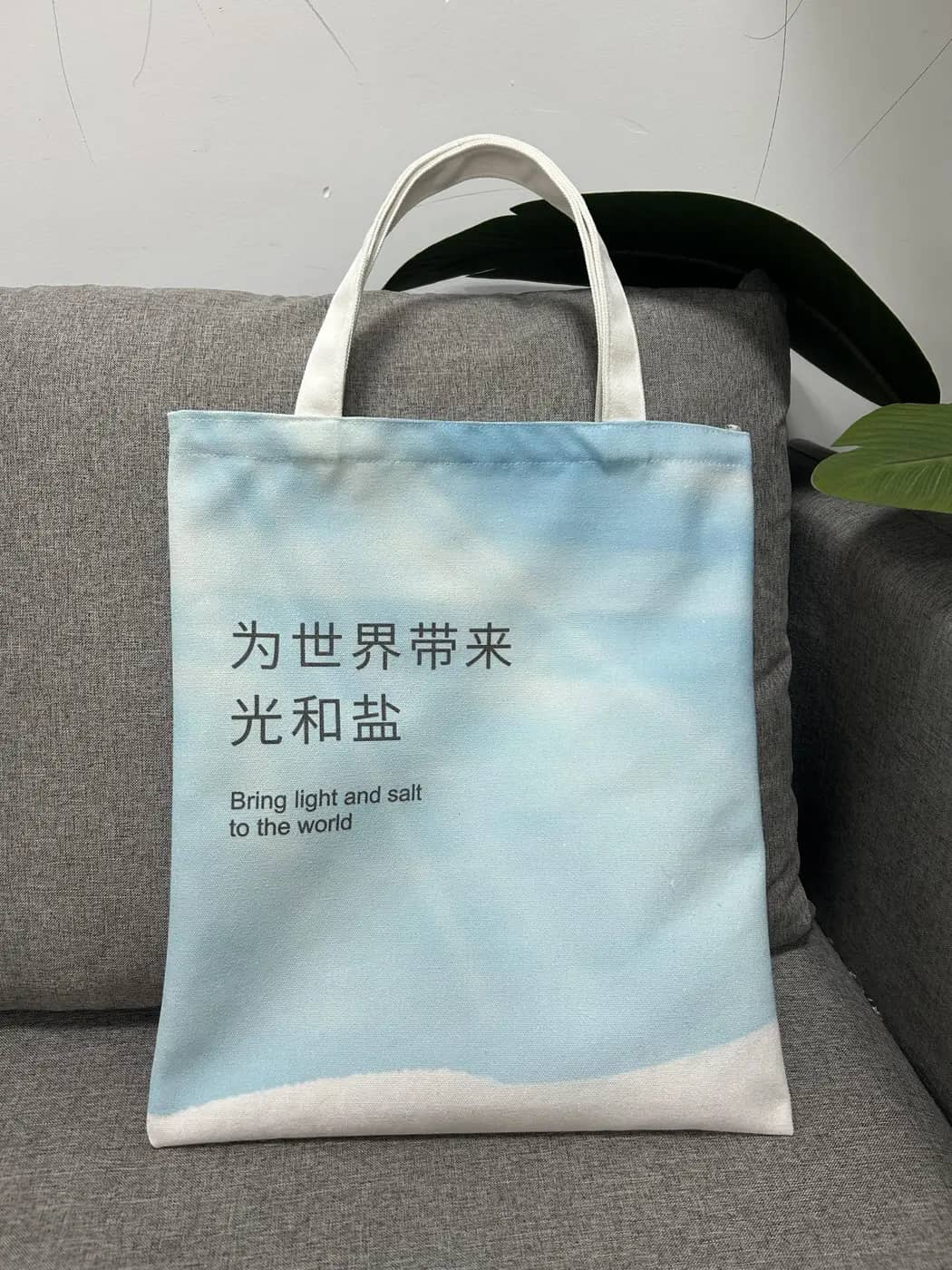 Poly-cotton
- Smoother face for photo prints
- Supports sublimation
- Slightly less natural texture
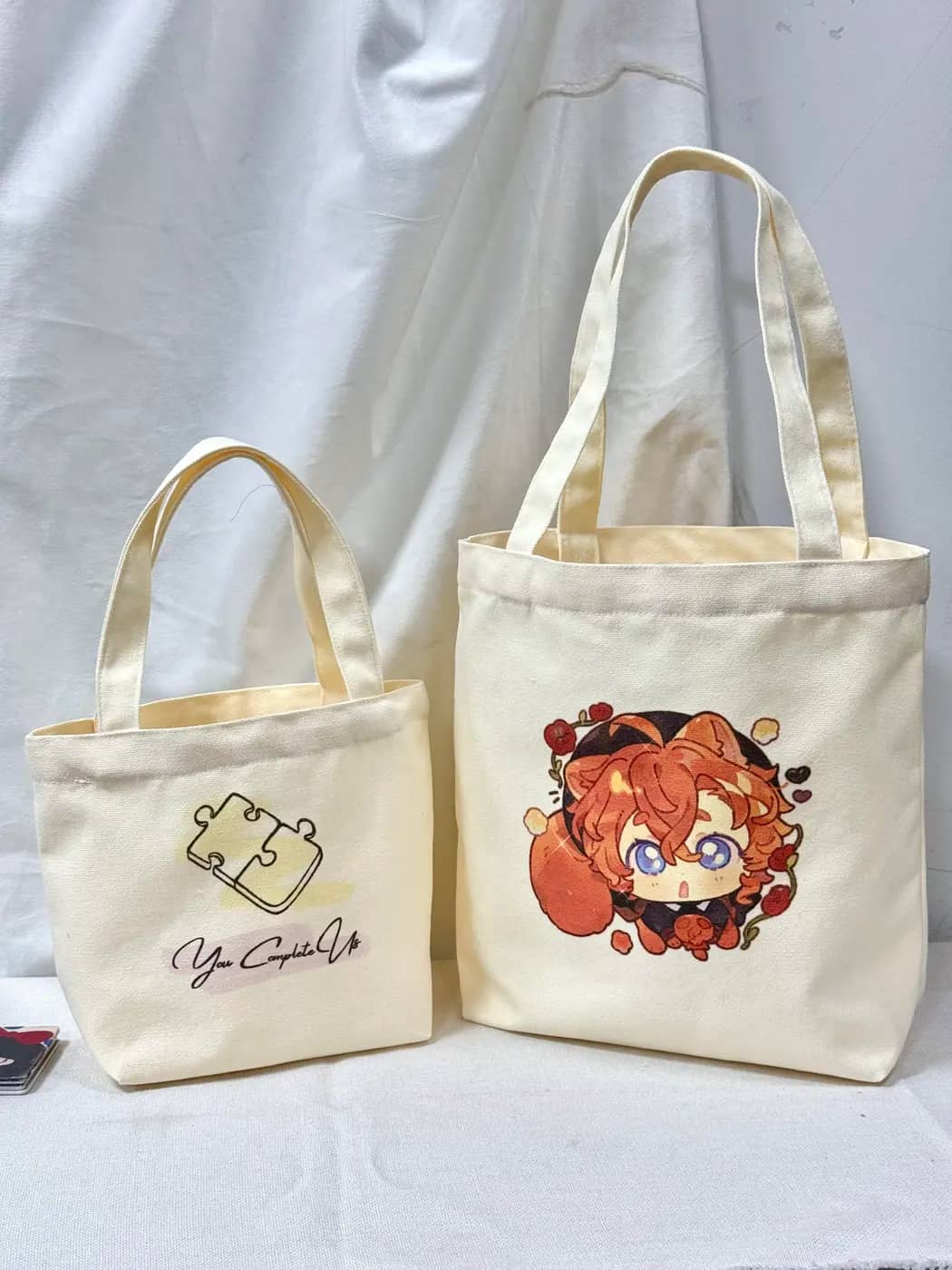
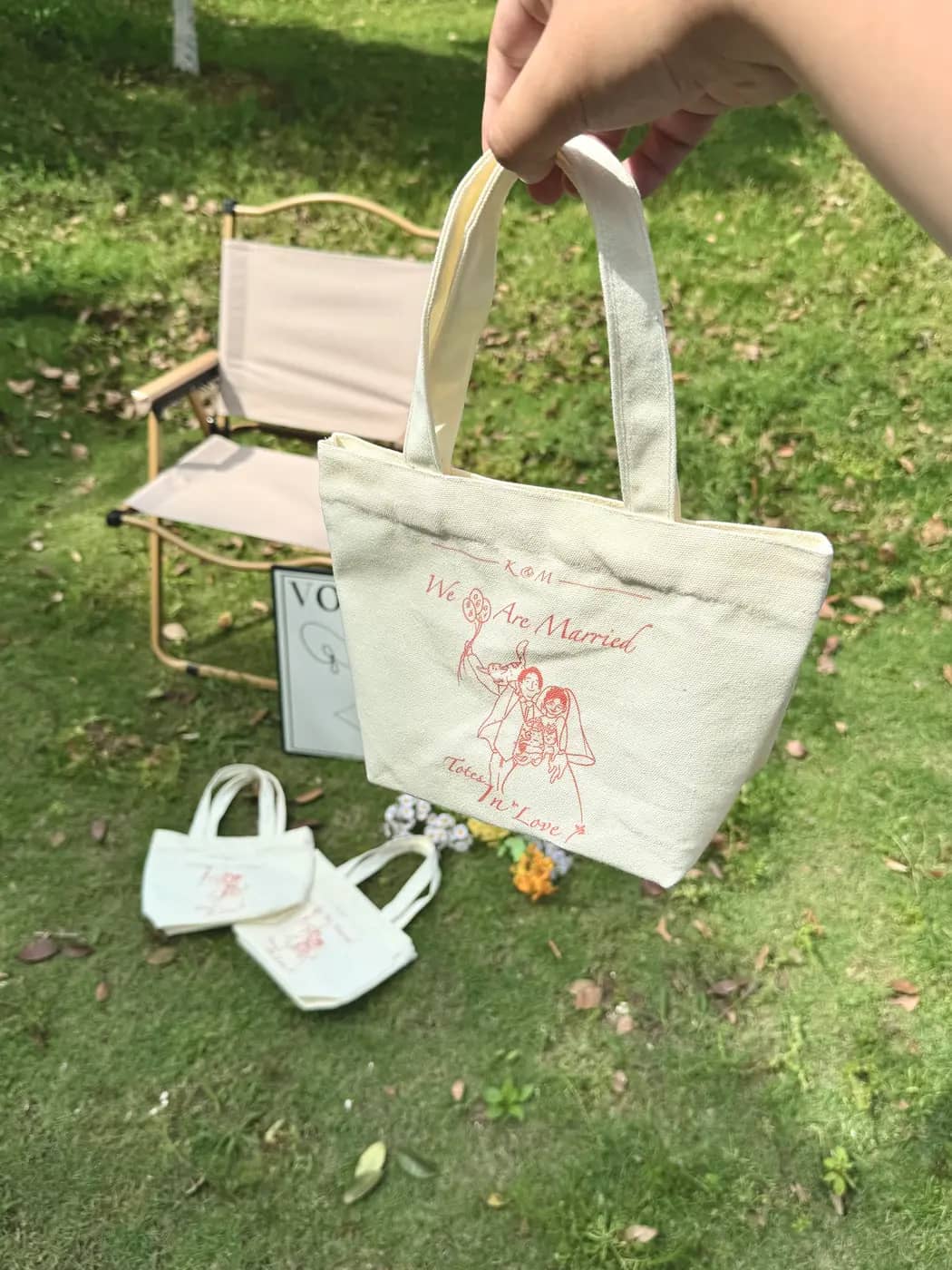
Canvas is what most brands picture when they say "tote bag". It takes every branding method, softens with use instead of looking worn out, and is the material customers are most likely to keep. Choose 10–12 oz for most retail and merchandise programmes — see our canvas weight guide.
For stronger sustainability credentials, use organic cotton certified under GOTS, recycled cotton, or at least fabric tested to OEKO-TEX® STANDARD 100 for harmful substances.
Jute: natural and rustic#
Jute grows quickly with little irrigation and gives a strong, coarse fabric. It suits farmers' markets, wine and food brands, and weddings with a natural theme. Printing is limited to bold, simple designs because the weave is open, and many jute bags are laminated inside and use cotton handles — which makes recycling harder.
Strengths
- Very strong and stiff
- Natural, rustic appearance
- Low irrigation crop
Limitations
- Coarse texture, fine detail is lost
- Often laminated or mixed-material
- Distinct natural smell
Non-woven polypropylene: lowest cost per event#
Non-woven PP bags are made from bonded plastic fibres. They are light, cheap and available in many colours, which makes them popular for conferences and supermarket promotions. They look and feel promotional, though, and tend to be discarded sooner than a canvas tote.
rPET: the low-impact synthetic#
rPET fabric is woven from recycled PET, mostly drinking bottles. It is strong, water-resistant, folds small and prints full colour beautifully. If you choose rPET, ask for recycled-content documentation so your claims are verifiable.
Rules and claims to keep in mind#
- Many markets restrict lightweight plastic carrier bags — the EU's rules are summarised on the European Commission's plastic bags page.
- Avoid unqualified words like "eco-friendly" or "sustainable" printed on the bag. State something specific and true, e.g. "made with 100% recycled cotton".
- Keep certificates (GOTS, OEKO-TEX, recycled-content) for each order in case a retailer asks.
- Print care instructions — a bag that survives washing gets reused more.
Video
Watch: durable canvas totes with leather handles
Durability is the most important sustainability feature. These heavy canvas totes are built to be carried for years.
Which material should you choose?#
Brand image & long life
Cotton canvas, 10–16 oz, ideally organic or recycled.
Lowest cost per attendee
Non-woven PP for one-day events.
Low impact + full colour
rPET or poly-cotton with sublimation.
Natural, rustic style
Jute with a simple bold print.